Arcade shooter
XenoTech
Nothing Is Coming to Help
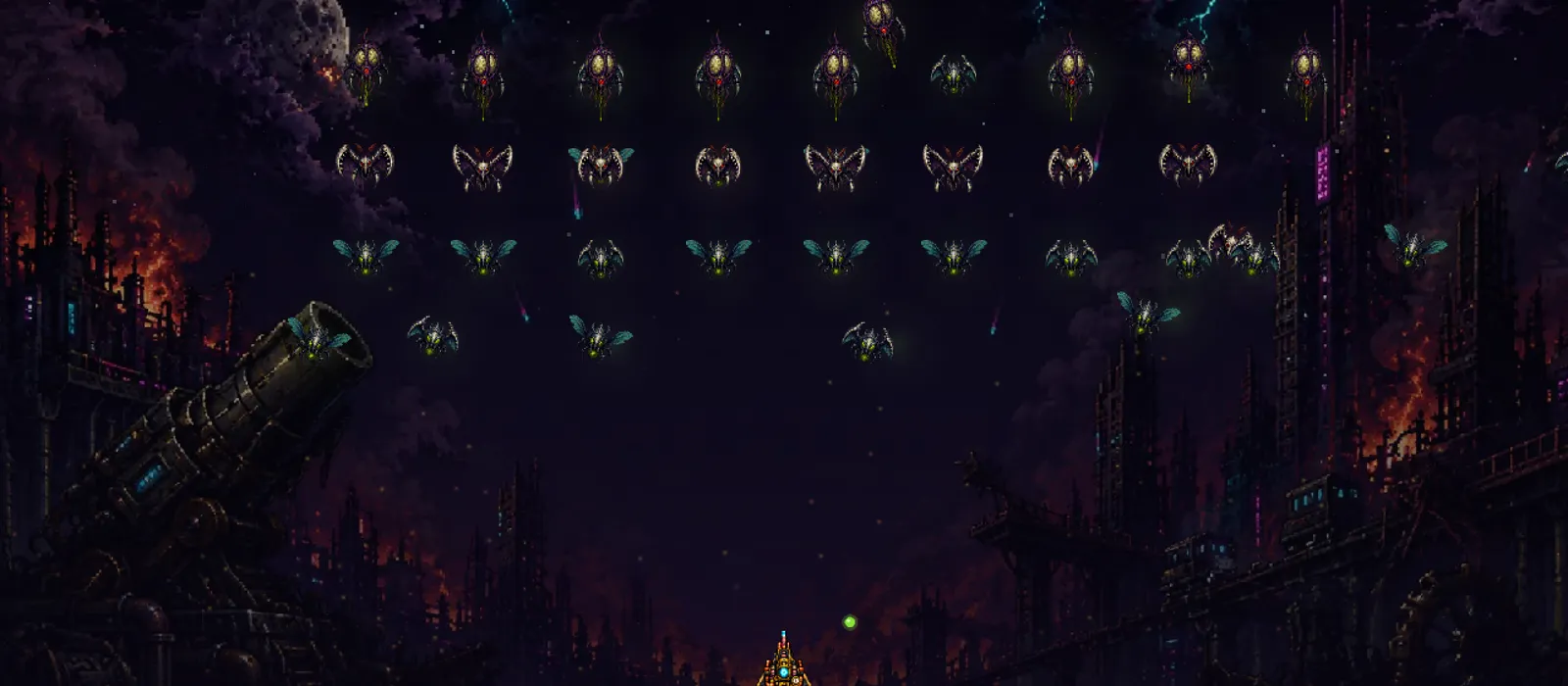
A hundred waves is one night. It starts in a ruined street at four in the morning and ends in the same street at dawn, and the shape of the run is you following them home and then being chased back out.
Browser — phone or desktop
- Inspired by Galaga
- Ten acts, ten places, one night
- Ten bosses, drawn coming apart
- Salvage your own wreck for a wingman
- Combo multiplier to ×8
- Global leaderboard
How a wave goes
Each wave arrives as a formation that swoops in from the wings, settles into a grid and sways there while individual enemies — sometimes three at once — break off to dive at you. Every tenth wave is a boss instead.
The grid stops growing at wave 10. There is a limit to how much a screen can hold and still be read, so everything after that is pressure rather than population: dives come faster, fire comes denser, both bestiaries mix into the same formation, and the bosses keep gaining phases up to five.
Kills inside two seconds of each other build a combo, and every three kills steps the multiplier up to a maximum of ×8. Clearing a wave pays a bonus that scales with the wave number up to wave 20 and then stops — otherwise arriving at wave 90 would pay better than playing the whole first half. An extra life every 25,000 points.
Salvage, and the thing wearing your ship
Losing a life leaves the hull behind. It drifts where the ship was, burning, and a harvester breaks formation and comes down for it — which is, after all, the job.
You have about six seconds. Kill that harvester and the wreck falls back to you and docks as a wingman: a second hull off your shoulder, firing every time you do. It is not a spare life. It flies offset, so it occupies screen the ship did not, and anything that reaches it takes it.
Fail, and it carries your hull off the top. The next wave has one enemy in it wearing your ship, slung underneath — tougher, worth three times as much, and firing your own cyan bolts back down at you. Kill it and you get the wingman anyway.
It is one enemy, and it is learning
It arrives as biology: grown things, chitin and bile, that have never seen a human or a machine. Then it meets us. At wave 30 the Vivisector starts taking us apart to find out what we are, and everything built after that is built out of what it found — the bone-and-chrome army in the second half is not a second faction, it is the same thing after school.
Past wave 60 the two mix, each role picking its tier from a piece of the wave number, so a given wave is always the same fight and consecutive waves rarely look alike. The last boss stands the city’s own siege gun up, which is only the biggest instance of the one move it ever makes: take what we have, and use it back.
Two shapes, not one letterboxed
The world is 1280×720 on a desktop and 720×1400 on a phone — the same game laid out twice, each with its own painted backdrop, rather than a widescreen field squeezed into a strip with a "please rotate your device" apology over it. A vertical shooter wants a tall screen anyway.
Sprites are drawn at half size on a desktop and full size on a phone. A 720-wide world with a 90px creature in it is about right for a thumb; the same sprites on a monitor an arm’s length away are a wall rather than a field of targets.
The ten places
Ten acts of ten waves. Each ends with its boss, then a card: the new place, held for a few seconds with two lines over it, before the next act starts. The card you read is the backdrop you then fight in.
-
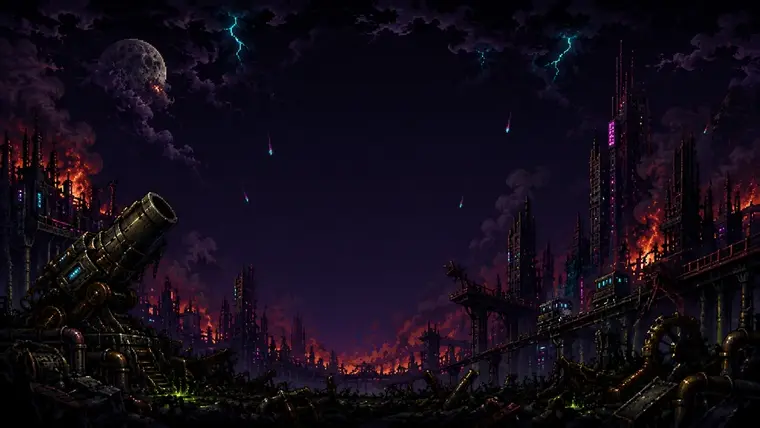
I. The Fall — waves 1–10
They came down through the cloud at four in the morning. Nothing answered from the towers. You are what is left of the watch.
-
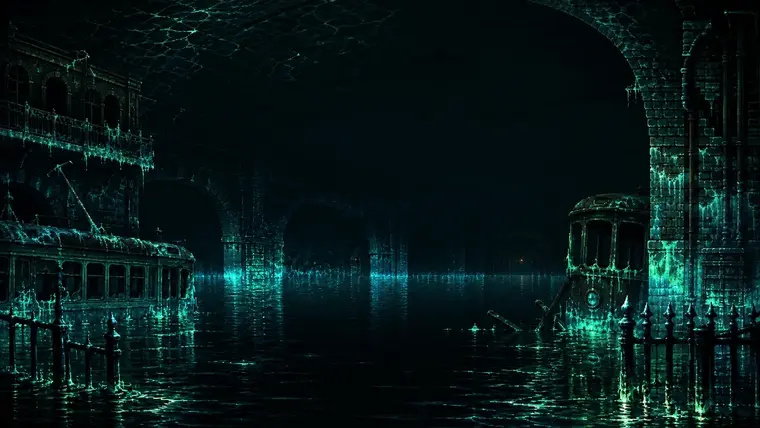
II. The Deep — waves 11–20
The canals took the flood when the pumps failed, and something came up them. It has never seen a city before. It does not know what we are yet.
-
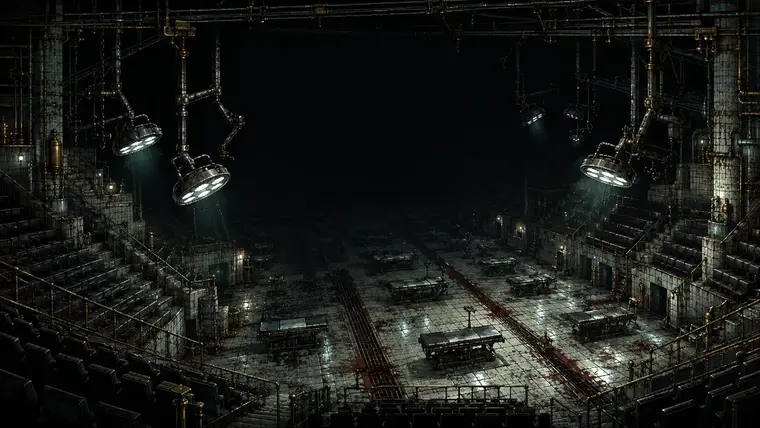
III. The Theatre — waves 21–30
It has started taking us apart. Not to kill us — it can already do that. To find out what we are made of.
-
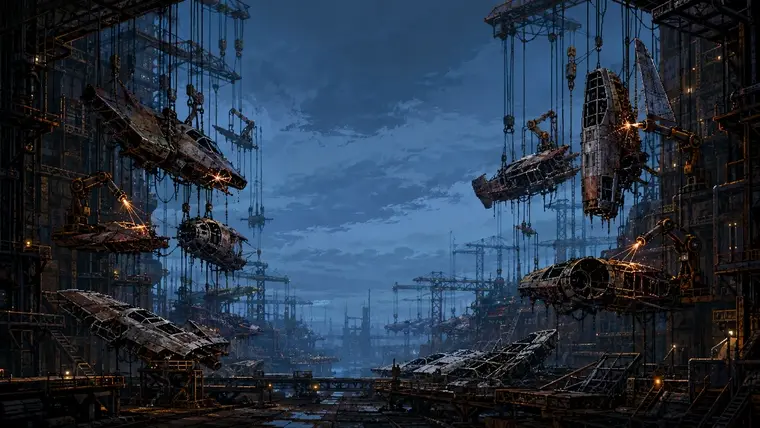
IV. The Yard — waves 31–40
This is where the hulls go. They were never trophies. Whatever is out there has finished reading the drawings, and it liked them.
-
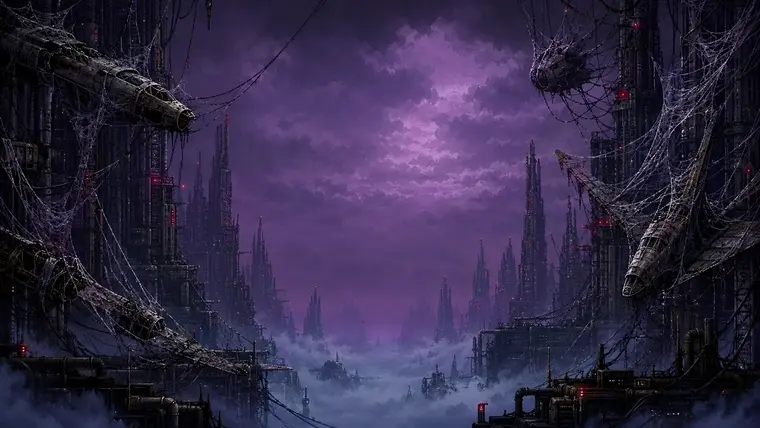
V. The Web — waves 41–50
The tram cables between the towers hold something else now. Everything we have lost tonight is up there, wrapped and waiting to be used.
-
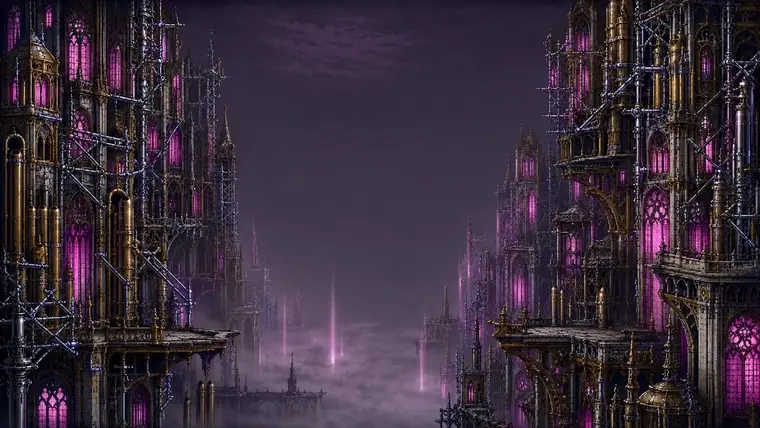
VI. The Hive — waves 51–60
It has a voice now. It did not arrive with one. It took ours apart in the theatre and worked out what a voice was for.
-
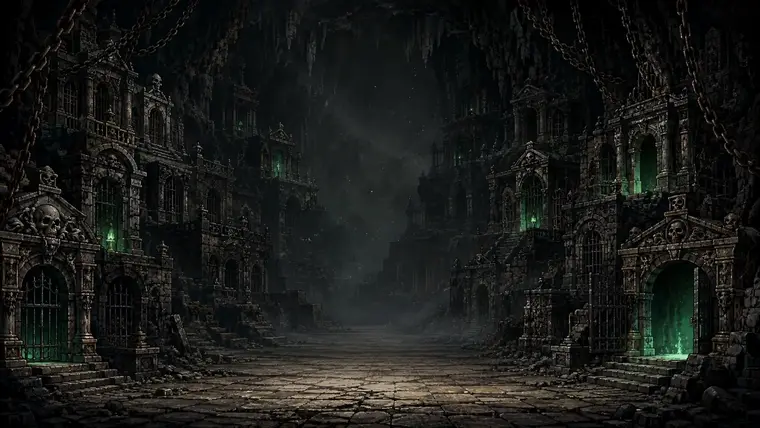
VII. The Necropolis — waves 61–70
Under the city there is an older city, and it is all doors. Something has been going along the rows, opening them. We are all material.
-

VIII. The Spire — waves 71–80
This is the best it will ever be: everything it learned, standing up straight. Above the cloud the air is very clear and there is nothing in it but this.
-
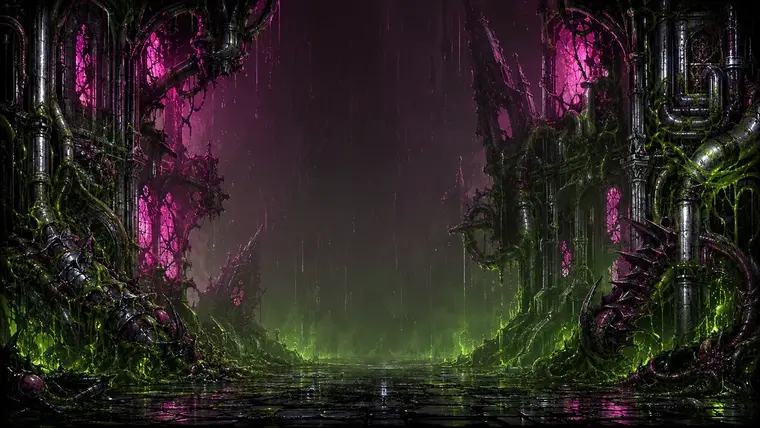
IX. The Apostasy — waves 81–90
It is losing the shape it learned. The old thing underneath is coming back through, and it is taking the cathedral with it.
-
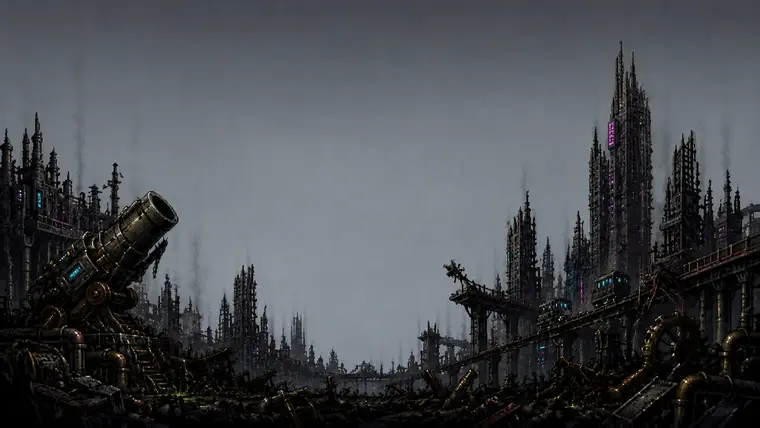
X. The Dawn — waves 91–100
You end where you started, in the street, at first light. Everything you have killed tonight was a piece of her. She has seen enough to come herself.
The ten bosses
None of them has an idle animation. Each is drawn at five stages of coming apart — intact, chipped, leaking, burning with its core exposed, and finally a cloud of debris — and the fight picks the frame from how much of it is left. You can see how it is going without looking at the bar. These are the first frames.
-
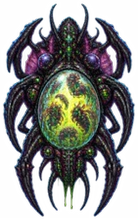
Gestator
Wave 10. The mother the brood came out of, and what a harvester is a fragment of: a sac of half-formed drones in a cradle of limbs. It ruptures as you kill it.
-
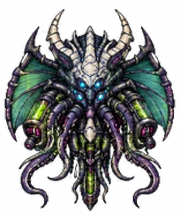
Leviathan
Wave 20. Aimed spreads, then a radial burst. Between phases the armour splits, it vents drones, and the damage window shuts while you deal with them.
-
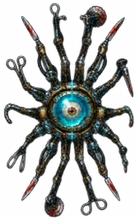
Vivisector
Wave 30. A ring of surgical arms around a lens, at the wave where it stops trying to kill us and starts trying to understand us. Its eye dims as the lens cracks.
-
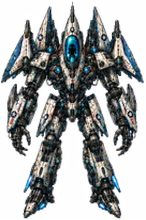
Reclaimer
Wave 40. A humanoid machine assembled out of hulls it has taken, with a cockpit in its chest. Damage strips the stolen plating off a layer at a time.
-
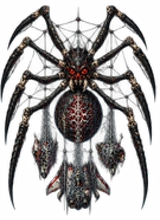
Widow
Wave 50. Where the harvest is kept: a spider strung across the sky with our wrecked hulls wrapped and hanging in her web.
-
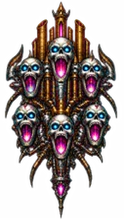
Choir
Wave 60. Seven skull-faced heads on one armature of organ pipework, lost one at a time. The fire in its mouths is pulled out of the drawing itself, so a head that is gone takes its fire with it.
-
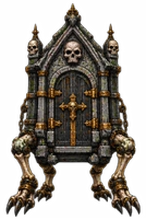
Sepulchre
Wave 70. A walking mausoleum on bone legs with a sealed door. The light behind that door is its glow layer, and it grows as the thing inside gets it open.
-
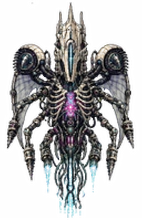
Herald
Wave 80. The cathedral, and everything it has learned standing up straight. Adds the wall of spores with a single gap in it. The gap is the fight.
-
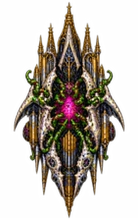
Apostate
Wave 90. The built form losing to the biology it started as — mostly cathedral in its first frame and mostly growth by its third.
-
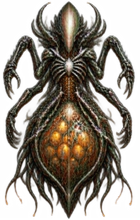
Queen
Wave 100. She was never a separate thing. The Gestator was one of her organs, the Vivisector was her curiosity, the Reclaimer was her first attempt at our shape.
The bestiary
Four jobs, done twice. The brood grew into them; the retinue was built for them.
-
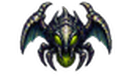
Drone
Brood. One hit, fast, and the bulk of any formation.
-

Moth
Brood. Two hits, and it fires more often.
-

Harvester
Brood. Three hits, and killing it makes the screen worse: the sac opens and two spawnlings come out diving.
-

Spawnling
Brood. What comes out of a harvester, already on its way down.
-

Acolyte
Retinue. Two hits, a skull slung between thruster pods — the drone’s job, rebuilt.
-

Seraph
Retinue. Three hits, and all wing.
-

Reliquary
Retinue. Four hits, a ribcage around something, and it opens the same way a harvester does.
-

Censer
Retinue. What comes out of a reliquary.
-

Verger
Retinue. Claws, and it takes the row nearest you.
-

Your ship
Three lives, confined to the lower half of the screen. Free vertical roam turns every wave into a shooting gallery at the spawn line.
Built with : Phaser · JavaScript · Node · Express · Postgres