Persistent-world MMO
Silicon Aftermath
Still Switched On
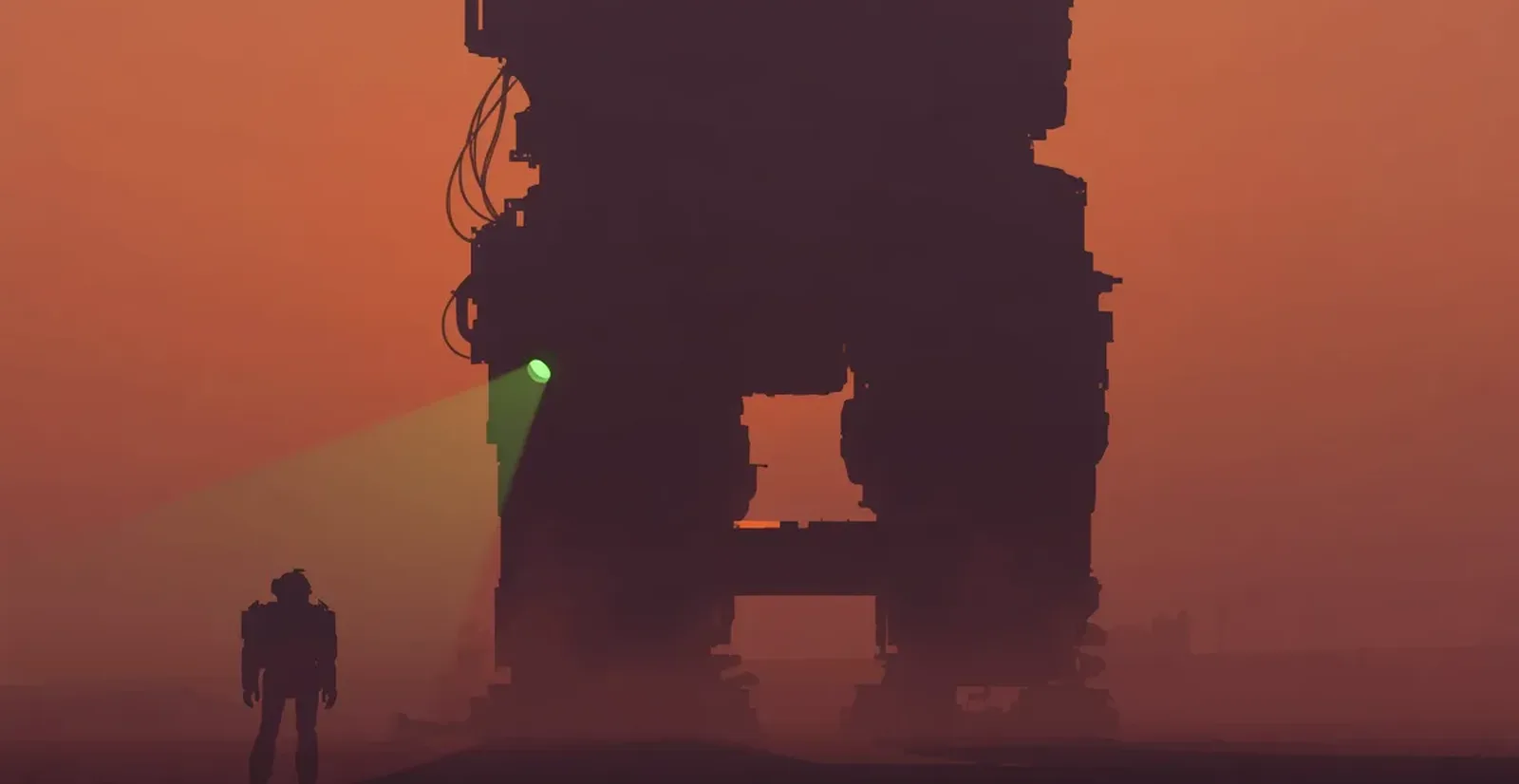
A persistent-world MMO played in a browser. Earth, forty years after the machine networks took control — you are a scavenger stripping downed machines for compute.
Browser — phone or desktop
- Inspired by Operation Overkill (1990)
- Timing-gauge combat
- Six maps, two of them underground
- Claimable player bases
- Live boss events
Combat is a timing gauge
Combat resolves on a timing gauge rather than menu selection or dice: strike a machine’s vent window and it hurts, strike the plating and it does not. The gauge is server-authoritative — the client is given a seed and the gauge parameters, never an outcome.
Weapons and enemies carry a damage flavour and armour resists per flavour. Enemies counterattack on your misses and grazes, and dodge scales off dexterity and armour class. Cycles and XP from a kill are credited automatically; only items need picking up.
Six maps, and an energy pool
Faraday is the safe hub, with counters you walk up to rather than a services button. Four field maps sit in level bands above it — the Outskirts, the Transit Belt, the Stacks and the Long Acre — each with its own generated biome. Two more are under those, reached by shaft tiles and gated by level: the Undercroft and the Core, both hand-drawn rather than generated.
Movement costs energy, one point per step, against a pool that regenerates in real time. Energy is the session clock, and rations drain per step on top of it.
Land you can hold
Field maps carry scarce plot tiles. Stand on one, pay silicon, and it is yours: a stash, a silicon vault, and a safe square nothing spawns onto or wanders across. Tiers raise storage, cut the rest cooldown and generate silicon per day, and eventually allow more than one base plus fast travel between the ones you own. Death offers your base as a respawn point alongside Faraday.
The endgame has to be caused rather than waited for. Carry the Archive’s phrase to the core terminal at the bottom of the Core and CENOTAPH comes online in the chamber with you — once, world-announced, with a lockout after it dies.
The wasteland
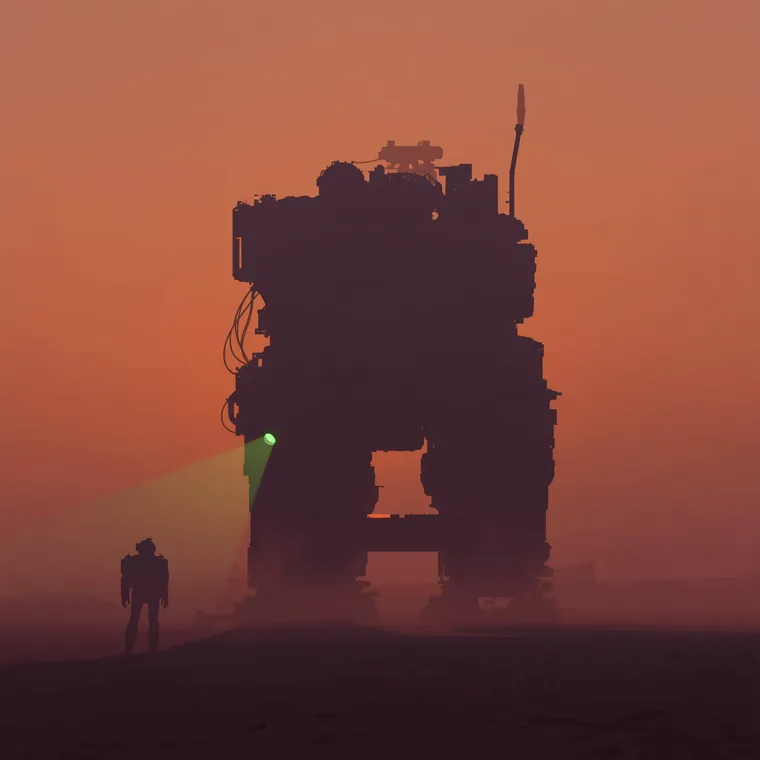
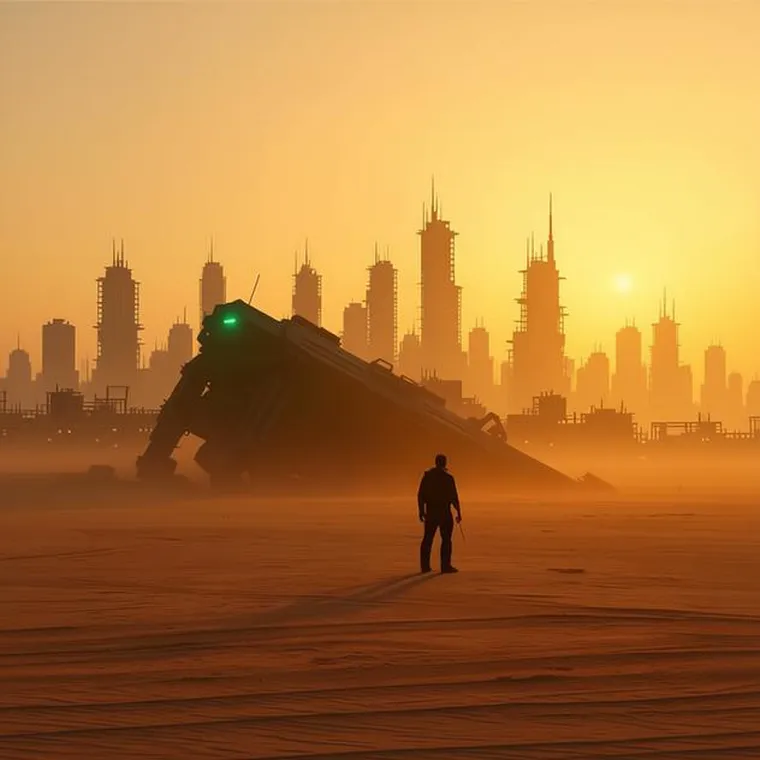
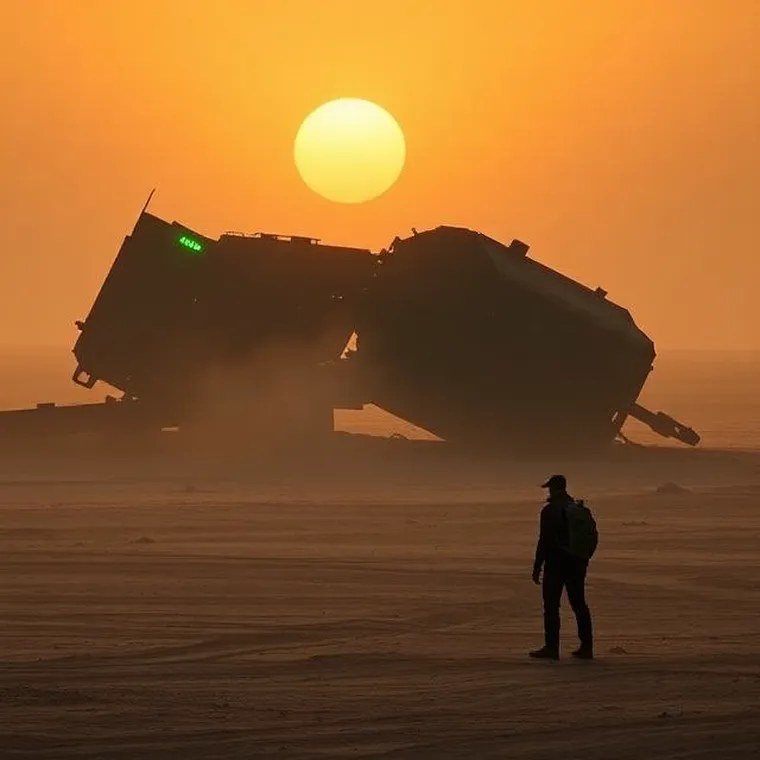
Concept paintings for the world above ground.
-
Still switched on
Forty years on, and the thing is still running its lamp over the ground in front of it.
-
A toppled machine
The skyline behind it never came down. Most of what is worth taking is inside something that stopped moving.
-
Downed, low sun
A scavenger works the wreck for compute, which is the only currency that matters.
-
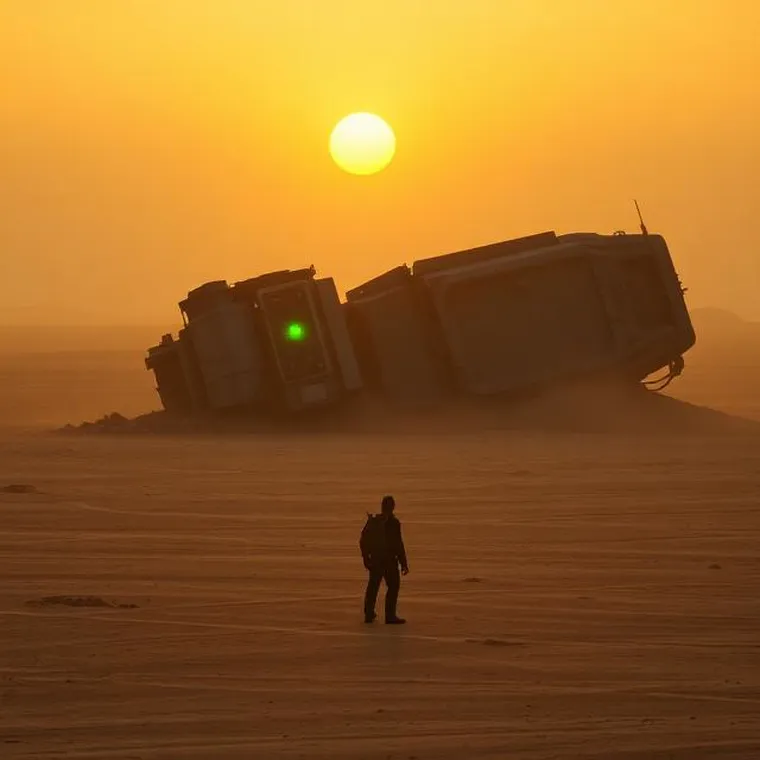
The overturned hauler
Field loot has a floor value: the counters in Faraday buy back at a fraction of list.
Built with : Laravel · PHP · Inertia · React · TypeScript · Reverb · Postgres · Redis · Tailwind